Optimising infrastructure – the way forward
Five key success factors emerged from our conversations with digital leaders:

Upskill for the future
People fuel the engine of change. Senior leaders need to buy into the business value of technology transformation. Individual employees need to know new technology will make their working day easier or more rewarding.
People are at the heart of creating change too. A software-defined infrastructure will work best with skilled human support. Part of the appeal of moving towards a cloud model is that cloud providers contribute their global muscle to keeping systems running and secure 24/7. But businesses don’t outsource their responsibilities, or the valuable skills of the workforce, when they move to cloud. A new approach to skilling-up is needed.
Christian Merkel at LogMeIn says: “In order to always have the visibility and awareness that the data and traffic is taking the smartest path possible, the engineers and network operating centre needed to manage that, despite a virtual intelligence technically managing it too. But Artificial Intelligence is programmed by a human being. And it’s a new technology. It can fail, and you still have the human component in there to help out and, and fix things when they break.”
Digital leaders who contributed to last year’s eBook highlighted that skills shortages were an issue for them – and that hasn’t changed. Finding and developing people with the right technical skills seems to be an evergreen issue. Unfortunately, it can’t be solved simply by outsourcing network infrastructure management to a patchwork of technology vendors.
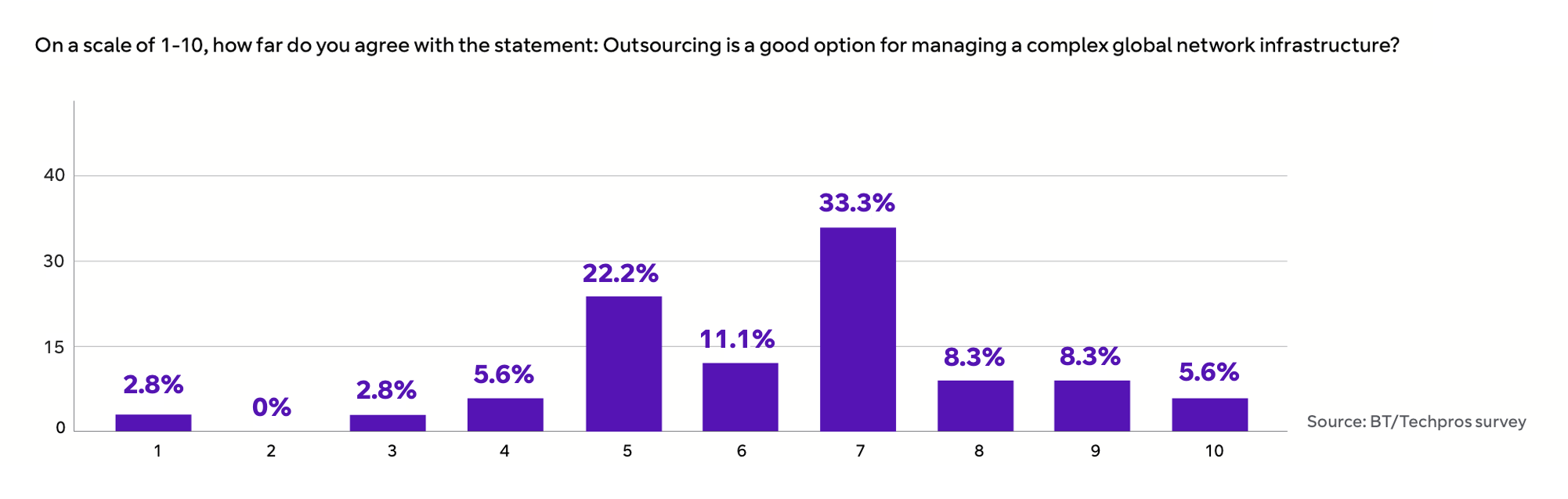
Rick Casarez at eBay says, “With outsourcing you can gain expertise immediately, without needing to go through the recruit cycle, saving time getting new people up to speed with your business requirements and your procedures. You can get a jumpstart as far as having an expert in that technology.”
But he cautions, “After that, you still need your people brought up. Because at a certain point, if you want to take it in-house and not have that outsource element, you can’t. You could pay for it forever, which is an option. But it’s something that's got to be a business decision. And a lot of factors will go into it beyond the technology skills. What's the ROI on it?”

Jeremy Smith,
Global Head of IT Risk and Security | Avery Dennison

We have a lot of legacy applications. And at times those people who support the legacy applications don't have the skillsets to build new modern applications. So, we've done a combination of upskilling and seeking partners, as well as hiring new digital leaders to help us in that transformation. It’s been a multipronged approach.

Action Points
- Review skills requirements regularly – it may make sense to develop some skills in-house even during an outsourcing process.
- Apply a layer of human skill to get the best from digitised and intelligent infrastructures.
Source: BT/Techpros survey
Share this page